Case study · Email deliverability · 2026
Suspended
to 390K.
ResearchInn, an international open-access publisher, had its bulk email account suspended mid-send after one campaign bounced at 14%. Over nine weeks I found the cause, rebuilt the programme and scaled it to 390,561 emails across its five journals, with the hard-bounce rate cut by a factor of 48.
- Client
- ResearchInn · five open-access journals
- Programme
- 37 campaigns, August – October 2026
- Platform
- OJS 3.4 journals + bulk email provider
- My role
- Deliverability, lists, campaigns & the journal platform
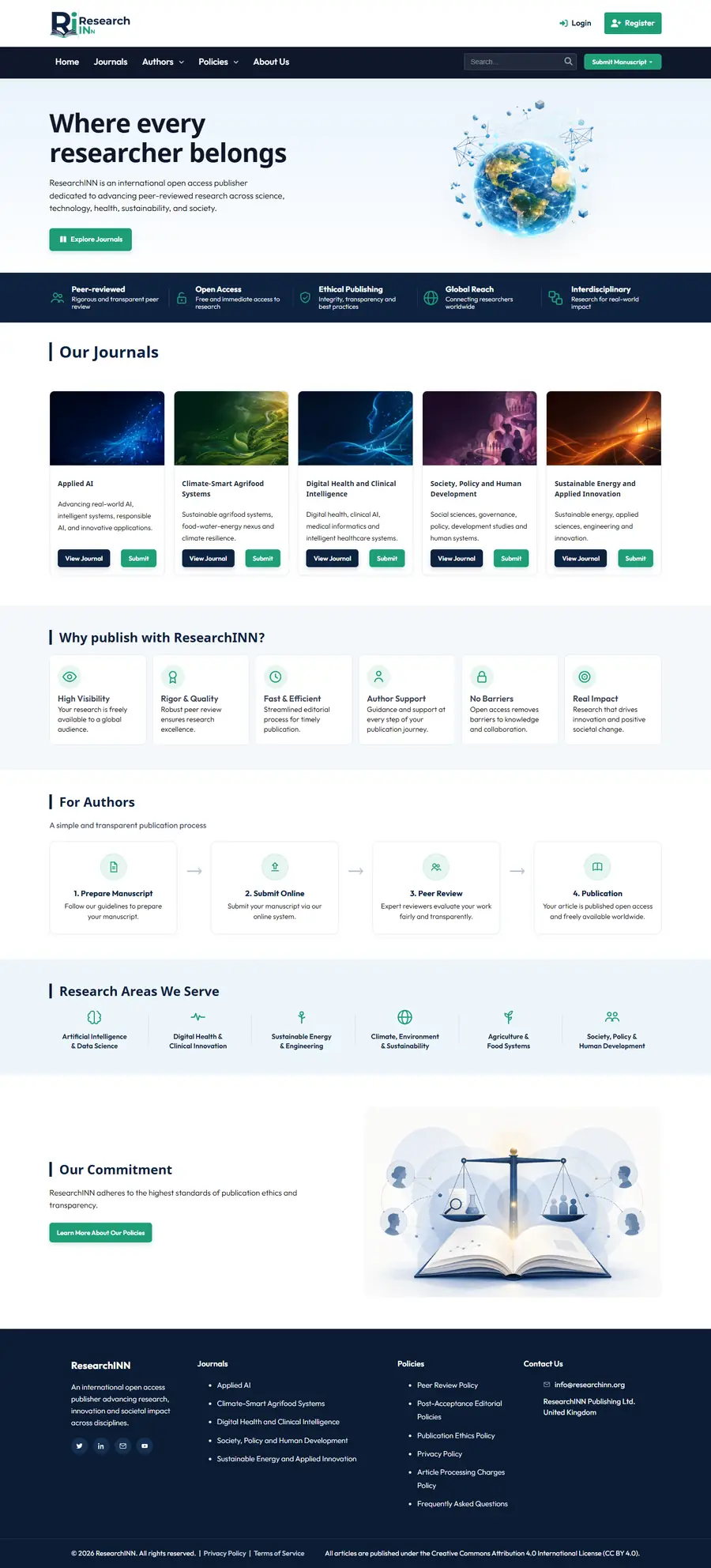

Hover the browser to scroll the journals homepage
Across 37 campaigns for five journals, from an account that had been suspended mid-send.
From 6.74% before the work to 0.14% in the re-engagement phase.
On a single 93,000-email campaign.
Across the whole programme: 18 complaints in 390,561 emails.
Scaled up while deliverability improved, not at its expense.
Identical content and audience. Spreading the same volume over time was worth about seven percentage points of deliverability.
01 · The problem
Dead mailboxes on live domains.
Three campaigns in August bounced at 6.74%, one of them at 14.01%, and the email provider suspended the account mid-send. An analysis of 27,691 contacts showed the cause wasn't spam complaints (there were none). It was dead mailboxes on domains that still worked: addresses taken from academic metadata, where the university domain still resolved but the person's mailbox had been closed. Domain-level checks can't see that.
The strongest predictor was how recent the paper was. Contacts from 2020 papers bounced at 9.04%; contacts from 2025 papers at 3.32%. Recency, not domain quality, decided whether an address would still accept mail.
02 · What I changed
Verify, suppress,
pace, schedule.
- Mailbox-level verification replaced domain checks, cutting bounces from 6.74% to 1.64% on first contact.
- Suppression lists built from the send data: every hard bounce, complaint and unsubscribe excluded on the server before the re-engagement phase.
- Send pacing diagnosed from SMTP response codes. Gmail's
421 4.7.0deferrals proved that throttling, not bad addresses, was costing 1,208 emails in a single campaign. - The provider's own scheduling replaced hand-built batches, spreading each campaign across 24 hours automatically.
Hard bounce rate by phase
03 · Results by phase
Every phase
cleaner than the last.
| Phase | Campaigns | Sent | Delivered | Hard bounce | Opens | Complaints |
|---|---|---|---|---|---|---|
| August · before the work | 3 | 12,828 | 90.72% | 6.74% | 18.21% | 4 |
| September · first contact | 29 | 211,629 | 96.91% | 1.64% | 5.44% | 12 |
| October · re-engagement | 5 | 166,104 | 99.46% | 0.14% | 1.86% | 2 |
| Total | 37 | 390,561 | — | — | — | 18 |
October went only to contacts who hadn't opened before, so its open rate is low by design. Its delivery rate is measured across the four completed campaigns.
04 · What pacing was worth
Same emails,
better timing.
| Send shape | Delivered | Soft bounce |
|---|---|---|
| 4 campaigns in one hour | 92.66% | 5.30% |
| Same volume, 3-hour spacing | 98.36% | 0.55% |
| 93k campaign, 24-hour spread | 99.43% | 0.40% |
Identical content and audience quality. The only variable was how the volume was spread over time.
05 · Scale & segmentation
Five journals,
everyone reached.
| Journal | Audience | First contact | Re-engagement | Total sent |
|---|---|---|---|---|
| Society, Policy and Human Development | 131,738 | 131,737 | 93,147 | 224,884 |
| Digital Health and Clinical Intelligence | 24,992 | 24,992 | 22,320 | 47,312 |
| Climate-Smart Agrifood Systems | 23,238 | 23,238 | 21,338 | 44,576 |
| Sustainable Energy and Applied Innovation | 17,563 | 17,563 | 16,019 | 33,582 |
| Applied AI | 14,102 | 14,102 | 13,280 | 27,382 |
| Five journals | 211,633 | 211,632 | 166,104 | 377,736 |
Every contact in all five audiences was reached at least once. Re-engagement went only to the 195,833 who hadn't opened, deduplicated at recipient level across 30 campaigns.
06 · Beyond email
The platform
behind it.
I also run ResearchInn's journal platform. I installed and migrated Open Journal Systems (OJS) with a custom theme, set up the server and moved it to new domains and hosting, and fixed the failing issue exports, XML errors and Google Scholar indexing problems that were blocking discoverability. Mail runs through SMTP with SPF, DKIM and DMARC plus server-level anti-spam, and the outreach lists come from my own extraction pipelines, cleaned with local LLMs.
- Deliverability
- Mailbox verification
- Suppression lists
- SMTP diagnostics
- OJS 3.4
- SPF · DKIM · DMARC
- Google Scholar indexing

verified →